
June 23, 2026 · The Equal Lens
The Bystander Effect: When Everyone Notices, But No One Acts




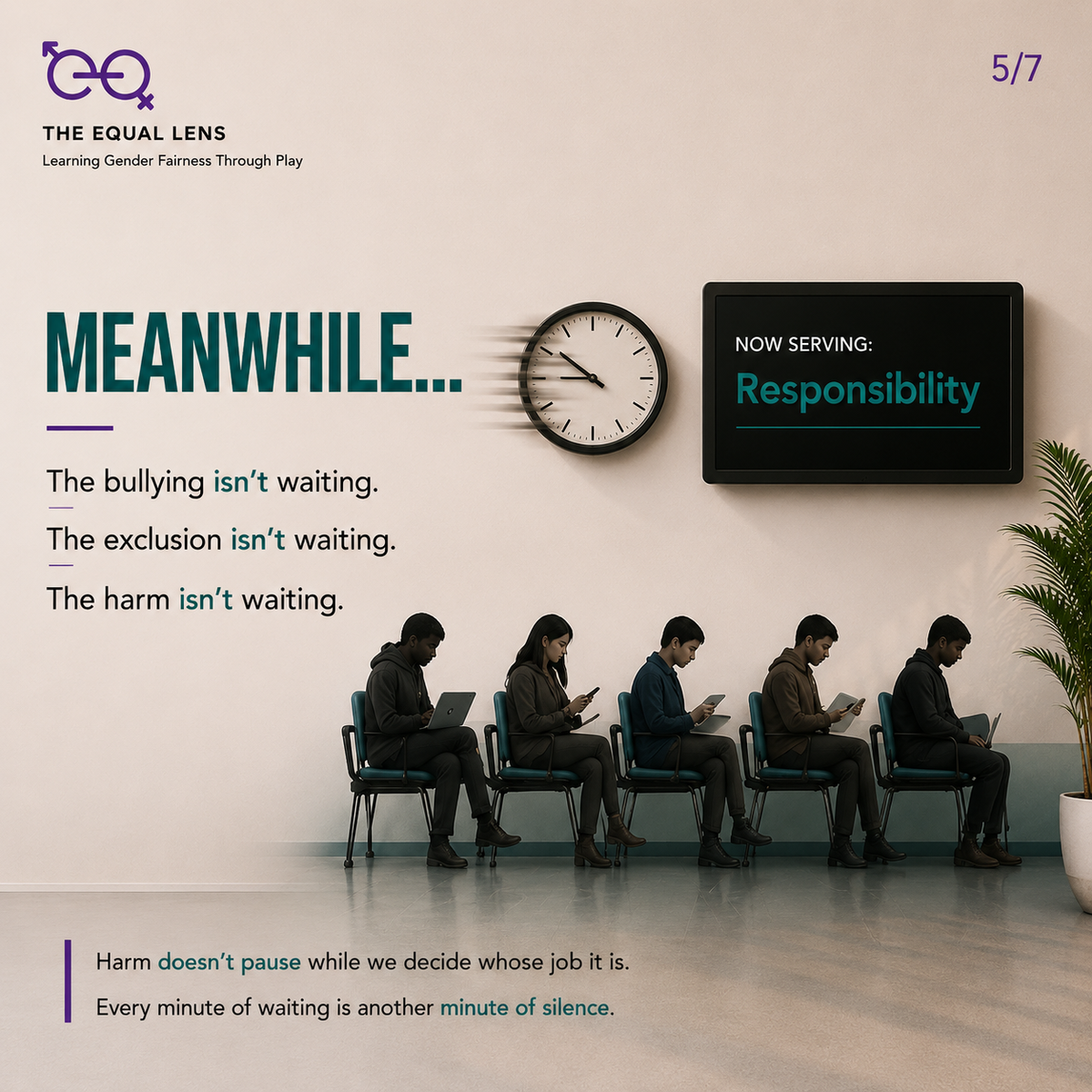


There is a particular kind of silence that can settle over a room when something is clearly wrong and everyone notices it, but nobody steps forward.
It is easy to assume that people in these situations simply do not care. In reality, the issue is often more complicated. Psychologists refer to this phenomenon as the bystander effect: the tendency for individuals to be less likely to help when other people are present.
At first glance, this seems counterintuitive. If more people witness a problem, shouldn't someone be more likely to intervene?
Research suggests the opposite can happen. When responsibility is shared among many people, each individual may assume that someone else is better placed to act, more qualified to help, or already handling the situation. Responsibility does not disappear; it becomes diffused across the group.
Meanwhile, the situation itself continues to unfold.
A hurtful comment goes unchallenged. Someone is repeatedly excluded from a conversation. A person appears distressed, but nobody checks in. These moments rarely pause while people decide whether it is their place to get involved.
One reason intervention can feel difficult is that people often imagine it has to be dramatic. We picture confrontation, conflict, or having to solve the entire problem ourselves. In practice, meaningful action is often much smaller.
Sometimes it is asking, “Are you okay?”
Sometimes it is choosing to sit beside someone who is alone.
Sometimes it is quietly informing a teacher, manager, friend, or trusted adult who is better equipped to help.
None of these actions require having all the answers. They simply require recognising that a situation may need attention.
Importantly, stepping in is not always about confidence. Many people who choose to act report feeling uncertain about what to do or say. The difference is not that they lack doubt; it is that they do not allow that doubt to make the decision for them.
Perhaps the most useful shift is a simple one. Instead of thinking, “Someone should do something,” consider asking, “What can I do?”
The answer may be small. But small actions have a way of changing what happens next. In many situations, the missing ingredient is someone willing to take the first step.